


✔ 100% Authentic Product
👁️ Currently Viewing 1560
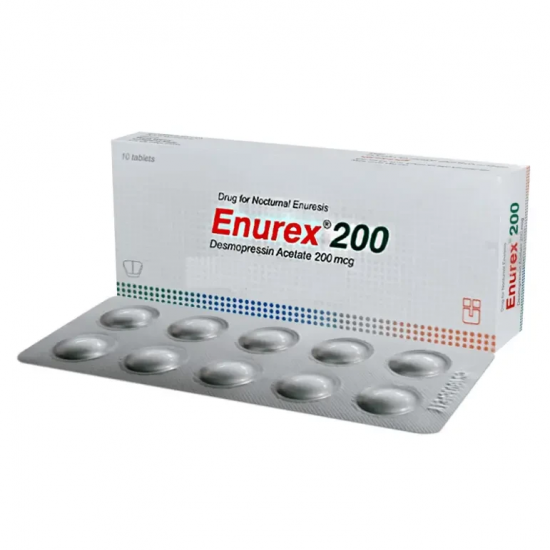
Enurex 200 Tablet
Enurex 200 Tablet contains Desmopressin, which works by reabsorbing water from the kidneys and helps control excessive thirst and urination in diabetes insipidus. It also reduces the amount of urine produced and helps control bedwetting in children.
Desmopressin acetate tablets should not be used in patients with:
- Known hypersensitivity to desmopressin or any component of the formulation
- Moderate to severe renal impairment (creatinine clearance <50 mL/min)
- Existing hyponatremia or a history of hyponatremia
There are no controlled studies evaluating the use of desmopressin in breastfeeding women. Therefore, it should be used with caution during lactation under medical supervision.
Discount
Price: ৳ 441
MRP:
৳
450
2%
Off

100% Genuine Products, Guaranteed

Safe & Secure Payments, Always

Fast, Secure & Efficient Delivery
Proper Packaging
 Cash on Delivery - All over Bangladesh
 Regular Delivery - 24-48 Hours, Dhaka City* Charge Tk.39-79
- Regular Delivery - 48-96 Hours, Other Cities* Charge Tk.110-125
 ফ্রি ডেলিভারিঃ - ৪৯৯৯ টাকা+ অর্ডারে, ঢাকা
শহরে
ফ্রি ডেলিভারিঃ - ৪৯৯৯ টাকা+ অর্ডারে, ঢাকা
শহরে- ফ্রি ডেলিভারিঃ - ৯৯৯৯ টাকা+ অর্ডারে, ঢাকার
বাহিরে
📲 মোবাইল অ্যাপ অর্ডারে সাশ্রয় বেশী
-
Google Play Store থেকে ডাউনলোড
-
Apple Store থেকে ডাউনলোড
100% Genuine Products, Guaranteed
Safe & Secure Payments, Always
Fast, Secure & Efficient Delivery
Proper Packaging
- Cash on Delivery - All over Bangladesh
- Regular Delivery - 24-48 Hours, Dhaka City* Charge Tk.39-79
- Regular Delivery - 48-96 Hours, Other Cities* Charge Tk.110-125
- ফ্রি ডেলিভারিঃ - ৪৯৯৯ টাকা+ অর্ডারে, ঢাকা
শহরে
- ফ্রি ডেলিভারিঃ - ৯৯৯৯ টাকা+ অর্ডারে, ঢাকার
বাহিরে
- Google Play Store থেকে ডাউনলোড
- Apple Store থেকে ডাউনলোড
📲 মোবাইল অ্যাপ অর্ডারে সাশ্রয় বেশী
✅ Description:
Enurex 200 Tablet is used to treat diabetes insipidus, post-hypophysectomy polyuria (extreme urination), polydipsia (extreme thirst), and bedwetting. Diabetes insipidus is a condition in which the body fails to control water balance, resulting in excessive urination.
Enurex 200 Tablet contains Desmopressin, which works by reabsorbing water from the kidneys and helps control excessive thirst and urination in diabetes insipidus. It also reduces the amount of urine produced and helps control bedwetting in children.
Enurex 200 also reduces bleeding tendency in haemophilia (a bleeding disorder) by promoting the release of blood-clotting factors.
Common side effects of Enurex 200 Tablet include headache, nausea, abdominal cramps, and flushing (a sensation of warmth in the face, ears, neck, and trunk). Although not everyone experiences these side effects, if they occur, seek medical attention.
Let your doctor know if you have severe kidney disease, hyponatremia (low sodium levels in your body), extreme thirst, uncontrolled high blood pressure, heart failure, or fluid retention. Pregnant and breastfeeding women should consult their doctor before using Enurex 200

✔️ Uses | Enurex 200
Enurex 200 Tablet is used to treat diabetes insipidus, a condition that causes excessive urination and intense thirst. It is also used to manage excessive urination and thirst after pituitary surgery (post-hypophysectomy polyuria and polydipsia).
✔️ Drug Interactions
Although the pressor (blood pressure–raising) effect of Enurex is minimal compared to its antidiuretic action, high doses should be used cautiously when combined with other pressor agents, with close patient monitoring.
Concomitant use with medications that increase the risk of water retention and hyponatremia—such as tricyclic antidepressants, SSRIs, chlorpromazine, opioid analgesics, NSAIDs, lamotrigine, and carbamazepine—should be undertaken with caution.
✔️ Dosage & Administration | Enurex 200
Sublingual Tablet
Diabetes Insipidus:
Dosage is individualized based on patient response. The usual total daily sublingual dose ranges from 120 micrograms to 720 micrograms.
A typical starting dose for both adults and children is 60 micrograms taken sublingually three times daily. The dose should then be adjusted according to clinical response. For most patients, the maintenance dose is 60–120 micrograms sublingually three times daily.
Post-hypophysectomy Polyuria/Polydipsia:
The dose of desmopressin acetate melt should be adjusted based on urine osmolality measurements.
Film-Coated Tablet
Adults and Children:
Treatment should begin with 0.05 mg (half of a 0.1 mg tablet) twice daily, followed by gradual dose adjustment to achieve optimal therapeutic response.
Most patients respond well to a total daily dose between 0.1 mg and 0.8 mg, administered in divided doses. Each dose should be tailored to maintain an appropriate day–night balance of water regulation.
If needed, the total daily dose may be adjusted within the range of 0.1 mg to 1.2 mg, given in two or three divided doses to ensure adequate antidiuretic effect.
Geriatric Use
Desmopressin is primarily eliminated through the kidneys. Since elderly patients are more likely to have reduced renal function, careful dose selection is required. Monitoring renal function may be advisable to minimize the risk of adverse effects.
✔️ Side Effects
Occasionally, high doses—particularly of intranasal or injectable formulations—have caused temporary symptoms such as headache, nausea, flushing, and mild abdominal cramps. These effects typically resolve after dose reduction.
✔️ Precautions & Warnings
Rare cases of hyponatremia have been reported in post-marketing surveillance. As desmopressin is a potent antidiuretic, improper use may lead to water intoxication, which can be life-threatening if not promptly treated. Fluid restriction is essential and should be clearly explained to the patient or caregiver. Continuous medical monitoring is strongly recommended.
High-dose intranasal formulations and injectable desmopressin have occasionally caused mild, reversible increases in blood pressure. Although this effect has not been observed with single oral doses up to 0.6 mg, caution is advised in patients with coronary artery disease or hypertension.
✔️ Storage:
Store in a cool and dry place, away from sunlight
Keep out of reach of children
Store between 10°C and 25°C, or below 30°C
Does not require cold-chain storage
⚠️Disclaimer:
At ePharma, we’re committed to providing accurate and accessible health information. However, all content is intended for informational purposes only and should not replace medical advice from a qualified physician. Please consult your healthcare provider for personalized guidance. We aim to support, not substitute, the doctor-patient relationship.
📦Pricing Information, Availability:
Product Availability & Pricing Notice
Please note that pricing, availability, and service offerings are subject to change due to: Market fluctuations, Manufacturer or supplier adjustments, Product discontinuation or temporary unavailability, Advertising errors. All orders depend on stock availability and staff resources. If services are provided on a time-and-materials basis, any shared estimates are for planning purposes only.


Reliable
All products displayed on ePharma are procured from govt. approved pharmaceuticals and verified licensed pharmacies from 2016.

Secure
ePharma uses Secure Sockets Layer (SSL) 128-bit 🔒 encryption and is Payment Card Industry DataSecurity Standard (PCI DSS) compliant.

Affordable
Find affordable medicine substitutes, save up to 50% on health products, up to 30% off on doctor consultations.

Social
Providing health care services under the health and beauty category with more than 170K Facebook audience and 10M+ reach.







Get more features!
Download the app now
🇬✓ Doctor consultation ✓ 24/7 helpline